
How to Track Labor and Materials Before Billable Work Is Forgotten
Track labor hours, materials, and extra jobsite tasks before they are forgotten. Learn practical ways to improve billing accuracy, cash flow, and contractor profit.
Why Tracking Labor and Materials Before Billable Work Is Forgotten Is a Must
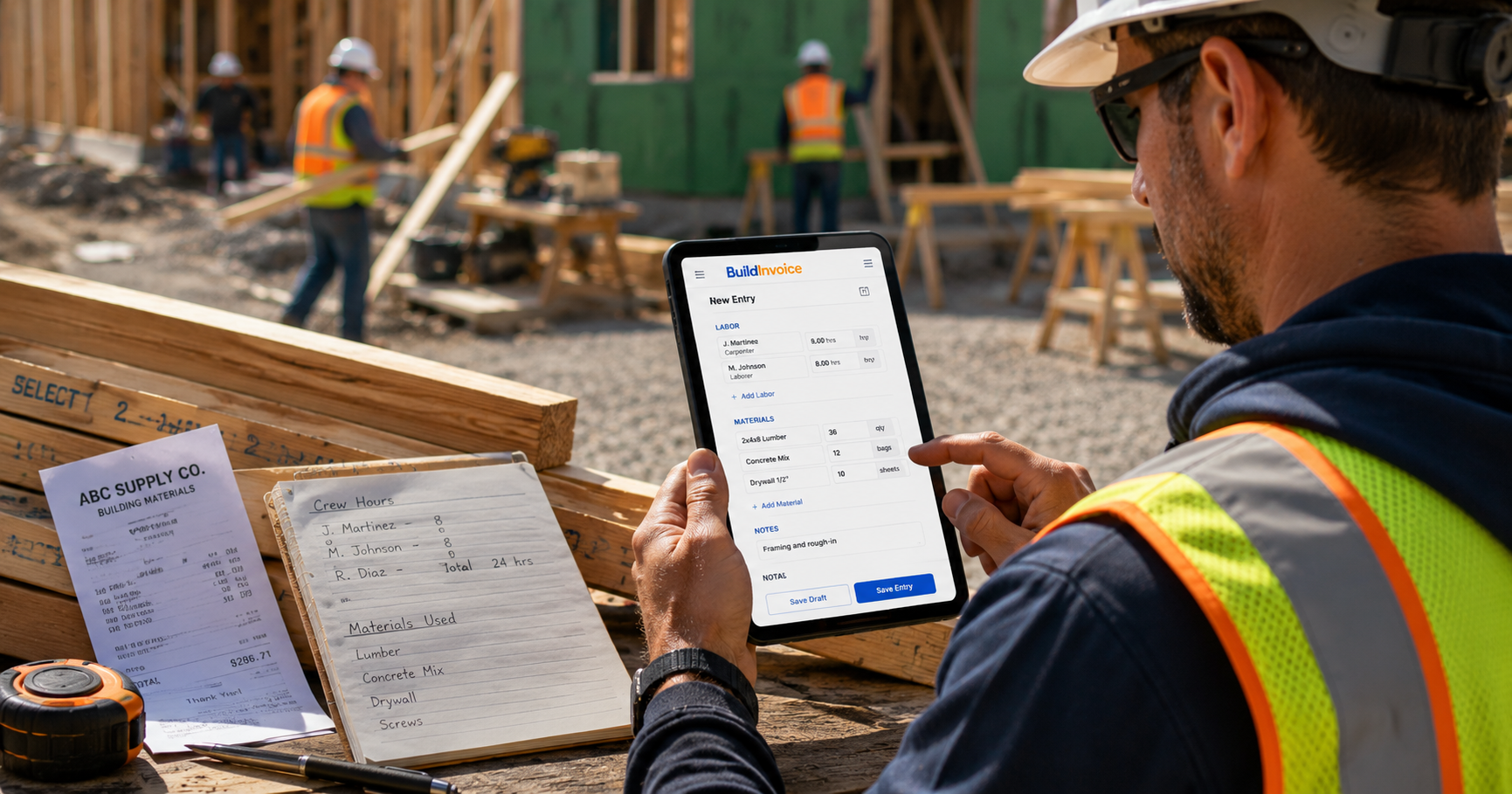
For busy contractors and skilled tradespeople, the workday often ends before the paperwork does. Labor hours, material use, extra tasks, and client requests can be easy to forget after a long day on the jobsite. When those details are not recorded, invoices can go out incomplete, billable work gets missed, and cash flow suffers. This guide explains practical ways to track labor and materials more accurately so you can bill with confidence, protect contractor profit, and keep your records organized.
Why Accurate Tracking Matters
In construction and trades, small documentation gaps can create real financial loss. An unrecorded hour of labor, a missing receipt, or forgotten materials used on the job can all lead to underbilling. Over time, these missed details reduce profit and make invoicing less reliable. Accurate tracking helps ensure you bill for the work performed, the materials used, and the added tasks completed, while also improving communication and supporting steadier cash flow.
Strategies to Track Labor and Materials Effectively
1. Use a Mobile App Built for Field Documentation
A mobile app makes it easier to record labor hours, materials, photos, and job notes directly from the field. Instead of waiting until the end of the day, contractors can capture information while the work is happening. That reduces forgotten details and keeps job records ready for faster invoicing. Tools like BuildInvoice can also support organized documentation across estimates, invoices, and proposals, helping contractors reduce paperwork delays.
2. Implement Real-Time Record Keeping
The best time to record labor and materials is while the work is being done. Waiting until the evening increases the chance that hours, supplies, and extra tasks will be missed. With BuildInvoice recording information is easy during breaks, between tasks, or before leaving the site helps create more accurate records and saves time later when preparing invoices.
3. Create a Simple Documentation Checklist
A simple checklist helps keep job records consistent. Each day, make sure you record:
- Start and end times for each worker
- Materials used or added
- Extra work requested by the client
- Jobsite notes or photos
- Any changes that may affect billing
Reviewing the checklist before leaving the site can help prevent missed billable work.
4. Use Bilingual Documentation Tools
If your crew or clients work in both English and Spanish, bilingual documentation can reduce misunderstandings and improve record accuracy. Capturing notes, material details, and job information in the language your team actually uses helps ensure important details are not lost. This is especially helpful for contractors who manage field communication in Spanish but need professional client-facing records in English, or vice versa.
How Better Documentation Improves Cash Flow
Better documentation supports faster, more accurate invoicing. When labor, materials, and extra work are already recorded, there is less delay between completing the job and sending the bill. Clear records also reduce billing disputes and help contractors spot cost overruns sooner. Over time, stronger documentation leads to healthier cash flow, more reliable pricing, and better control over profit.
Practical Example: A Day on the Jobsite
Imagine a siding job where labor hours, material quantities, and added trim replacement are recorded throughout the day. Instead of trying to remember everything that evening, the contractor already has organized records ready for invoicing in their BuildInvoice App. The invoice can be prepared faster and easier, the client receives a clearer bill, and the contractor is less likely to miss billable work.
Frequently Asked Questions
1. What labor details should contractors record on the jobsite?
Contractors should record each worker’s start and end times, breaks, tasks completed, overtime, and any additional work outside the original scope. These details help support accurate invoicing, payroll records, and job-cost analysis.
2. What material information should be tracked?
Record the material name, quantity used, unit cost, supplier, receipt, delivery charge, and the project where it was used. Contractors should also note substituted, damaged, returned, or customer-requested materials that may affect the final bill.
3. When is the best time to document labor and materials?
The best time is while the work is happening or immediately after each task. Waiting until the end of the day or week increases the risk of forgetting hours, supplies, additional work, and client requests.
4. How does labor and material tracking improve cash flow?
Complete records allow contractors to prepare accurate invoices sooner. Faster invoicing can reduce billing delays, prevent missed charges, support clearer customer communication, and help businesses receive payment more promptly.
5. Can jobsite photos support labor and material records?
Yes. Photos can document completed work, material deliveries, project conditions, damage, and changes requested by the client. They should supplement written records rather than replace detailed notes, pricing, and approvals.
6. Why are bilingual documentation tools useful for contractors?
Bilingual tools can help Spanish- and English-speaking crews record job information more accurately. They may reduce misunderstandings while allowing contractors to create clear client-facing invoices, estimates, proposals, and project records in the appropriate language.
7. How can BuildInvoice help prevent forgotten billable work?
BuildInvoice is designed to help contractors capture labor, materials, job notes, extra tasks, and project details from the field. Keeping this information organized can make it easier to prepare professional invoices and proposals before billable work is forgotten.
Conclusion
Tracking labor and materials does not need to be complicated, but it does need to be consistent. When contractors record hours, materials, extra tasks, and jobsite changes in real time, they reduce missed charges and improve billing accuracy. Better records lead to smoother invoicing, stronger cash flow, and less end-of-day stress. If you want a simpler way to capture field details and turn them into professional records, read the full BuildInvoice guide and explore how better documentation can help protect contractor profit.
Checklist for Effective Jobsite Documentation
- Use mobile apps for instant logging
- Keep real-time notes during work
- Create a daily checklist of tasks and materials
- Use bilingual tools if needed
- Review records before leaving the site
0 Comments